Pages

Tuesday, June 14, 2016

One In College And One In Kindergarten: A Dad's Perspective

The quality of a father can be seen in the goals, dreams and aspirations he sets not only for himself, but for his family. ~ Reed Markham

As we continue to celebrate fathers, I absolutely love sharing this story of this quintessential family man. I enjoyed his stories, posts, and pictures about his wife and daughter, and I actually squealed when I saw what was next to come for them. Enjoy! 

Most people have a season in their lives where they have kids. Usually they space the kids out to be 2-3 years apart. But what do you do when your kids are 16 years apart? 

When I found out I was going to be a father for the 1st time, I was 20 years old. I was in summer school, between my sophomore and junior years of college, when my girlfriend told me that she was pregnant. (I actually knew she was pregnant before she told me, but that’s a story for another time.) Although it was a life-changing surprise, I was more excited than scared or nervous. I always knew that I wanted to be a father and I knew that I wanted a few kids. It wasn’t the timing I had in mind, but I immediately got excited about being a dad. It was surreal when we went to the doctor for the 1st checkup and he announced that the baby’s due date was March 8, 2000. When the doctor asked why I was laughing so hard, I told him excitedly “That’s my 21st birthday!” It was going to be the perfect birthday present. But my sweet daughter Taylor decided that she wanted to come into the world showing me who’s the boss. She took her time and made her debut on March 10th, 2000 instead. When I got a look at this face, I forgave her. 

Welcome to the world Taylor! 

Taylor’s mother and I never married, but we became great co-parents. Over the years, we have always worked hard to make sure that Taylor knew that her parents love her. School, work, and other life changes have put physical distance between Taylor and me, but I always make sure that she knows her father is there for her no matter where I am and where she is. 

Taylor's First Christmas

In 2008, I got married to a wonderful woman named Patrice. I was so excited to start the new chapter of being a husband. While we were dating, we knew that we didn’t want to have kids right away because we were still young (29 and 26). So we wanted a few years before we started trying. Well, sometimes the process of starting a family takes a little longer than you think it will because it’s not your plan that matters. It’s in God’s hands. So in August 2015 at the ripe old age of 36, I found out the great news that I was going to be a father again! We were expecting a child that would be born in April 2016. If you’ve been doing the math, you know that would put a whopping 16 years between children. That led me to create this meme: 


Stages of change: You're happy when you find out your wife is pregnant. But then you do the math & realize... You're going to have a kid in kindergarten & college at the same time...But then you remember that kids are a blessing & you can't wait to be a dad again!
So our family was blessed with a new addition on April 17th, 2016. A boy named Dwayne Dan Morrow, III or as we call him “Trey”. 

Just 2 Dwaynes Hanging Out

The main thing I can tell you about the difference between being the father of an infant and at 21 & 37 is that those sleepless nights take a much bigger toll on the body. It’s going to be a challenge to help 2 kids that have such a big age difference develop that sibling bond. But they are working on it already.  

Tay and Trey

I still know that fatherhood is the greatest responsibility that I have. I was blessed to have many examples of great fathers in my life to look up to like my own father, my grandfather, and various uncles. I aspire to live up to their example in shaping the lives of my children.  So to all of you fathers out there, I say take the responsibility seriously, but have fun being a father. I hope fatherhood puts a smile on your face like mine. 


Dwayne Morrow, Jr. is a graduate of Tennessee State University. He has served in various community education roles over the past decade. He is the executive director of the nonprofit, Individuals Providing a Positive Presence, Inc.  You can follow Dwayne on Twitter and Instagram @ddmjr79, You can follow IPPP on Twitter and Instagram @IPPP_INC If you would like to contribute to IPPP's important programs, please visit them here

Tuesday, June 7, 2016

A Present and Devoted Dad: The Real MVP

"My father didn't tell me how to live. He lived a let me watch him do it" ~ Clarence B. Kelland

At Blossom Health and Maternal Wellness, we love to celebrate mothers, but the reality is that, without dads, there would be no babies, and without babies, there would be no moms for us to celebrate. That's why, we're taking time to celebrate dads too! First up, is The MVP, Vincent Payne. His wife and I were pregnant at the same time in 2012. As a result, he and I traded war stories over Facebook and Twitter about the process. As we grew closer to our respective due dates, we were both trying to get that end of the year tax refund. They made it, we didn't. I got over it, and since then, we've shared photos and stories of our little ones on social media and have had many of the same laughs and experiences. Just when I was catching my breath as a newish mother and thinking about taking another plunge into pregnancy, I learned that the Paynes were out to win it all. They went for a full rout! Undefeated! Take a look! 


I was asked about being a father, and didn't know where to begin. First of all let me say that being a father is more of a blessing than I could have ever imagined. I guess you can say I was a late bloomer, since I had my first child at the age of 34. I don't know if there's a right way to do it, but my wife and I decided to travel and get to know each other better as husband and wife, before adding children to the equation. That worked out well for us. We have no regrets. 


My wife told me she was pregnant with our first child on Easter Sunday 2012. I was filled with so much excitement that I did not know what to do except smile for like half of the day. The next big moment was finding out the sex of the child. I was totally nervous. The second I found out I was having a little boy I pretty much jumped out of the building with excitement. By then, I was ready for all of the festivities, I swear between myself and my wife we had like four baby showers. Of course having so many family and friends to give us the baby showers was blessing and Lord knows we accept all blessings this way. We are so grateful for our village.

Regarding fatherhood: I have a father who was very much in my life from the second I was born. He was a great role model and SHOWED me what a father is.  As long as I can remember I knew that when I became a dad, I would be a completely hands on father. I didn't want to miss a thing. First words, first step, first poo poo in the toilet, all of that! Well needless to say, I was present to catch all of "the first" with my first born. It has been wonderful!  


At some point, my wife and I started the conversations of having a second child. We thought we had planned it out so perfectly. We didn't want to have two kids in diapers at the same time so once our first son was potty trained at 2, we thought we were good. We made another baby. We were so excited to add to, and likely complete, our family.  At a regular doctor's visit, we got the news that we were having twins. God got jokes! We were initially stunned and overwhelmed, but it wasn't long before my wife and I realized that having twins was an extreme blessing that we wouldn't take lightly. Once again came the nervousness of finding out the sex of the twins. There couldn't have been better news to find out we were having a boy AND a girl! 


I sit here now a 37 year old father of 3! I promise fatherhood makes me feel 10 years younger. At least for now. I'm sure more stressful days are yet to come. There is soooo much out there that you have to think about as parents. Schools, neighborhoods to live in, extracurricular activities, foods to give them, etc. But like anything else, having faith in God is how I face all of these challenges head on without worrying about them one bit.


I can't wait to see what the differences will be between raising our sons and our daughter. 


Vincent is a 37 year old native ATLien. He is a proud alum of Tennessee State University and Georgia Tech. He has lived and worked in Dallas, Detroit, Cleveland, and Winston Salem, as an architectural engineer. He has been married for 8 years and is the father of three. He has returned to Atlanta and works as a senior construction manager. He is a proud member of Kappa Alpha Psi Fraternity, Inc., and in spare time, he loves spending time with his family and playing golf with his childhood and college friends. 


Sunday, June 5, 2016

Muhammad Ali The Legendary Father

I wish people would love everybody else the way they love me. It would be a better world. ~Muhammad Ali

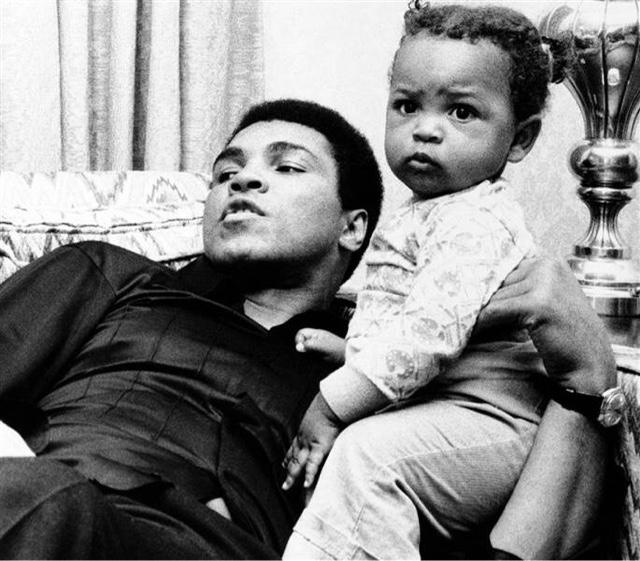
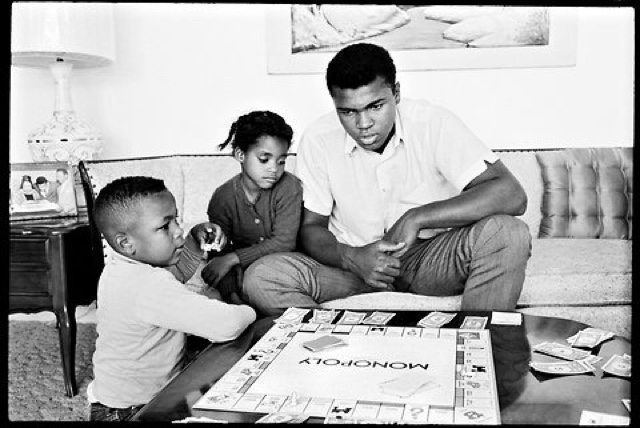
International Icon, Activist, Humanitarian, and Athlete Muhammad Ali loved life and loved children. Celebrate The Greatest through these amazing photos and videos of his children, grandchildren, and family friends. 


Because of Them, We Can: Muhammad Ali


Muhammad Ali on Getting Ready to Meet God


Muhammad Ali's Advice To His Daughter's 


Muhammad Ali History For Kids


Malcolm X on Cassius Clay


Muhammad Ali and Malcolm X 


10 Great Ali Quotes


Ali's Daughters


Prince's Hero


 I Am The Greatest


Muhammad Ali Cartoon


Muhammad Ali- Full Animated Episode


Muhammad Ali Spars With Michael Jackson


Muhammad Ali and The Jacksons


10 Knock-Out Facts About Muhammad Ali


Stories For Kids: Muhammad Ali


Muhammad Ali on Why You're Younger Than You Believe 


Muhammad Ali KO'd By A Kid


Muhammad Ali Meets The Public


Muhammad Ali's Childhood in Louisville


Muhammad Ali's Youngest Daughter 


Muhammad Ali's Wives and Children


Lessons From Laila's Father


Muhammad Ali's Grandsons Find Their Way 


Muhammad Ali's Final Days


We love you, Champ.

Sunday, May 15, 2016

Hyperemesis Related Post Traumatic Stress Disorder (PTSD): Morning Sickness It's Not

It's an alien and a parasite. It makes me tired and weak. It's complicated my whole life. I resent it. I have no idea how to take care of it. I'm the anti-mother. ~The Waitress, 2007

Trusted Nurse Midwife Friend: "So, when are you going to get past this HG thing and have some more kids?"

Me: "Oh! I'm not. I can't. I can't get past it at all. As much as I love my child, and as much as I love being a mother, I can't begin to imagine having to go through that again, especially while caring for a toddler. All three of us would suffer. My husband may be OK. {giggle} Nope. I can't imagine. I couldn't put my family through that. I'm open to adoption though."

I really do not mean to perseverate over my experience, but even after 3+ years, I cannot get beyond it enough to desire another pregnancy. I did not have a life-threatening pregnancy. My child's health was never at risk, but still... I would not mind revisiting the muscle aches, heartburn, constipation, shortness of breath, bladder urgency, fatigue, or even the 23 hours of unmedicated labor, that I experienced with my first pregnancy; but to have to suffer through that unrelenting nausea, vomiting, and lethargy, moment after moment, for weeks on end, is too much to imagine. Just after the birth of my daughter- you know when everyone immediately starts asking about baby #2- I joked about not being emotionally stable enough to endure a 2nd pregnancy. I always laughed, but now as a postpartum doula, I support many moms who have had birth trauma that leads to postpartum mood disorders. The more that I read about their complex and sometimes debilitating emotional state, and the more that I listen to their stories, the more I see myself in their struggle. Because I had an otherwise healthy pregnancy, a birth with minimal intervention, and a perfect child born at 40 weeks, I never considered that I was in the birth trauma crowd, or was at risk for pregnancy related depression or anxiety. I was wrong. I have slowly come to realize that I had post-traumatic stress disorder (PTSD) related to my hyperemesis gravidarum (HG). Yep! That's really a thing!

In the 1930s, Dr. Freud's popular psychodynamic theory was applied to women with HG, which resulted in physicians viewing mothers as mentally ill women with a subconscious rejection of the fetus, as if the she were literally trying to throw the baby up. It was further speculated that the mother's illness was related to broken relationships, broken homes, marital distress, depression, anxiety, abuse, resonating disorders, hysteria, sexual dysfunction, poor self-confidence, poor coping skills, and good ol' stress. The treatment of HG during ths time included isolating the mothers and leaving them to rot in their own vomit, without bowls or buckets, and without any assistance other than the regular presentation of more food, which every HG mom knows is the very last thing that is wanted. Later, intravenous fluids were used as a treatment, so while fewer women were dying as a result of HG, those who survived were still being mistreated. Although there have been additional medical advancements in the treatment of HG, these psychological factors continued to be cited as the source of nausea and vomiting through the 1990s, which means that even relatively young doctors, treating mothers today, learned this archaic information in medical school. Many are still telling mothers that they are just stressed or anxious. That's pretty scary. 

Fortunately today, there are more humane ways of treating HG... even though I was terribly isolated, because I could neither predict, nor recover from my nausea, vomiting, and simultaneous incontinence; and I did mostly, OK always, clean up my own vomit and urine, because it either happened while I was working alone, or overnight, when I did not want to wake my hardworking husband- especially after that time that he accused me of just wanting attention. I cringe to think about that even now, but he didn't know. He had never heard of HG (neither had I), and none of his six older sisters had ever experienced it, so there was no known source of empathy. The repeated need for IV fluids helped him to understand my need for help better, along the way. Zofran was the only way that I survived. Fortunately, my pregnancy occurred before the claims the drug causing birth defects. I really feel for those HG moms who had to suffer under that fearful shadow. 
“What was really significant to me was that women with extreme morning sickness who took Zofran reported fewer miscarriages and terminations and experienced higher live birth rates,” Fejzo said. “Taking this medication helped them get through their pregnancies and gave them their desired outcome, a live birth.”
Marlena Fejzo, PhD

Today, it's clear that psychological factors do not cause HG, but they can definitely be the result of HG. An expectant mother who is violently ill throughought the day, to the point of ejecting blood and bile, having constant leakage from her eyes, nose, hoo-ha, and mouth (a condition called ptyalism), is going to be at risk for antepartum depression, postpartum depression and anxiety. Many women with HG are placed on bedrest, and many others should be. Those who are on bedrest are often too sick to journal, scrapbook, chat, or e-shop, like mothers who are resting for other conditions. Any mother who is too sick to work outside of the home or care for her children could very likely feel guilty; and her inability to contribute to her home, could create an additional strain on her marriage and finances. Insomnia and black-outs are common with HG. Emetophobia, or the fear of vomiting, creates even more anxiety and can lead to panic attacks. The fear of dying or actually wanting to die are very real thoughts for HG sufferers. Some medications even offer suicidal ideation as a side effect. Imagine that? 

I can remember being so sick on the day of my baby shower. It took me forever to pull myself together and get out of the house, but friends, including the hostesses had traveled 3 and 4 states away to honor me. I had to get it together. I was late for the shower, and they were irritated. I couldn't bring myself to complain about how I was feeling on that day. Who wants to be Debbie Downer at her own baby shower? So, I arrived when I could, and sadly, those relationships were strained as a result, leading to more isolation. One of the friends had incredibly survived HELLP and a subsequent premature delivery, and the other had never been pregnant. There was no easy way to explain this inescapable hell that happens to fewer than 5% of pregnant women, and typically results in a healthy birth. No way. 


I can also remember suffering in silence because my blood pressure and blood sugar were not at risk. My uterus was in a great space, my baby was growing well, and her heart rate was active. What did I have to complain about, when as an occupational therapist with NICU experience, I saw both mothers and neonates at far greater health risks? What I know now is that HG was tortuous and it robbed me of the joy and happiness of a major life event. It was miserable, it was traumatic, and it was a kind of loss. I was felt helpless, hopeless, withdrawn, and even ambivalent about the birth of my child, which of course brought on even more feelings of guilt, shame, and fear. Naturally, this experience puts HG moms at risk for depression, anxiety, and post traumatic stress disorders. 

Post traumatic stress disorder is caused by a single traumatic event, like a rape, assault, or natural disaster, but it can also be caused by prolonged exposure to an extremely stressful situation, like foster care, domestic violence, and hyperemesis gravidarum. Symptoms include disturbing thoughts, dreams, hallucinations, and feelings related to the event. They also include mental distress, physical distress, avoidance of related situations, and alterations in thought patterns, lasting for longer than a month after the event. Even though the nausea and vomiting are finally relieved at birth, when HG survivors have PTSD, they have an actual fear of getting pregnant, which may be extreme enough to avoid sex or rush into permanent birth control. How stressful is that on a marriage, especially one in which the mother was probably not ever excited about having sex during pregnancy? This avoidance could lead to yet another loss; this time, that of a larger family that was hoped for before HG reared its ugly head. A father, wanting to "try for a son", may become resentful of his HG survivor partner, who has absolutely no desire to become pregnant. Likewise, that mother may become resentful of her husband for pressuring her to do so. She may also become strangely resentful of her child or children who "caused" these horrible feelings of body and mind. 


Flashbacks, hallucinations, and panic attacks are signs of PTSD with HG survivors. Food anxiety can also appear during the postpartum period. Moms who have not been able to eat for 6-10 months, may experience a continued aversion to food, or overeating, similar to someone who was starving at some point. Both extremes are dangerous to the mother's health and her child's well being, especially if she is breastfeeding. The symptoms may show up at anytime after the birth, and may become especially exacerbated if a subsequent pregnancy does occur. Hyperemesis is typically present in and may be progressively more severe with each pregnancy. It does not usually abide by the "every pregnancy is different" rule. 

Physicians are doing a better job of identifying postpartum depression. There is a greater understanding and more empathy around this group of hormone related mental illnesses. Health care providers are even getting better at referring mothers who have had traumatic births to psychological care. Unfortunately, PTSD related to HG is less recognized, considered, diagnosed, taken seriously, or treated. PTSD can be terminal, but it is very treatable when symptoms are identified and help is sought. It's existence, severity, or impact should never be underestimated. Some survivors experience life long anxiety, especially around needles, hospitals, and medical procedures. Others are anxious and resentful around glowing mothers, as they continue to feel cheated by their dark pregnancy. These feelings intensify anytime HG is dumbed down to extreme morning sickness or a survivor's story is invalidated. 


In order to minimize PTSD symptoms, at any phase, mothers should be able to rest and relax without guilt or additional stress. Any mother who has had a stressful pregnancy, or traumatic birth, should consider hiring a postpartum doula, in order to help with the transition of motherhood. She should also consider establishing a relationship with a psychologist or counselor who could screen for and treat any depression or PTSD. A strong, observant, and knowledgeable circle of support is vital.

So, while I am not into a position to move beyond my traumatic hyperemesis experience to the point of having another child, as a birthworker, I am eager to help mothers who have survived hyperememsis and want to live their best lives beyond that experience. If you need help, please reach out. You do not have to suffer in silence. You do not have to suffer alone.

What is your experience with Hyperemesis Gravidarum?

Tuesday, May 10, 2016

Living With Lupus... As A Mother

We may run, walk, stumble, drive, or fly, but let us never lose sight of the reason for the journey, or miss a chance to see a rainbow on the way. -- Gloria Gaither

Pregnancy and motherhood come with their own set of challenges. From impossible fatigue to seemingly endless aches and pains, new mothers experience a wide array of symptoms that can make the whole mom thing less than fun. However, when those common symptoms are exacerbated by the pain, inflammation, irritation, respiratory distress, and suceptible immunity of lupus, there are many other factors to consider, for mothers, her child, and her circle of support.

What Is Lupus? 
Lupus is a chronic autoimmune disorder, wherein damaged cells of the immune system attack healthy cells of multiple systems, leading to inflammation, joint pain, and skin rashes, in addition to kidney, heart, lung, nerve, and liver damage, in severe cases. Digestive issues and anemia are also areas of concern. All over, and usually, symmetrical joint pain is often the first sign. There may also be a common "butterfly" rash across the face, along with other skin irritations, sensitivities to the sun, and mouth ulcers. In fact, the entire integumentary system may be affected in the form of scaly skin, brittle nails, and patchy hair loss. Another symptom is unrelenting and debilitating fatigue, often with a low-grade fever. Lupus shares many symptoms with rheumatoid arthritis, fibromyalgia, Sjögren's syndrome, and other autoimmune conditions. A battery of lab tests and history help to diagnose lupus. Women are 10 times more likely to get lupus than men, and women who are African-American, between the ages of 20-40, and related to someone with lupus, are more more likely to get the he incurable condition, than other groups. The symptoms of lupus come and go, present themselves one at a time, altogether, or in any combination, and can be treated by addressing its multiple symptoms with corticosteroid pills or cremes, NSAIDs, and antimalarial medications. People living with lupus are at an increased risk of developing heart disease and having a stroke. 


Lupus and Fertility 
Lupus alone does not create issues with fertility. During the preconception period, a woman with lupus should meet with a rheumatologist, perinatologist, and a pediatric cardiologist, in order to discuss risks and options for both mother and child, including finding a hospital that specializes in specialized infant care. Hopeful mothers should adopt and maintain a healthy lifestyle in order to minimize lupus-related symptoms. Women who conceive while symptoms are in remission are less likely to have complications during pregnancy. While fewer than 50% of lupus pregnancies have complications, all pregnant women with lupus are considered high risk. Planning pregnancies while living with lupus is important.


Lupus and Pregnancy
The pregnancy complications associated with lupus include an increased risk of miscarriage, still birth, prematurity, preeclampsia, and HELLP syndrome.  In order to monitor and decrease these risks, more frequent doctors' visits are necessary and eventual bedrest is likely. All pregnancies are different. Some will require treatment early on to adjust medication levels, while others require frequent monitoring after the first trimester, in order to check for blood clots, blood pressure, fetal growth, and offer reassurance, often via ultrasound. The physiological demands of pregnancy can often place extra stress on the mother's heart, liver, and kidneys. Expectant mothers and their partners should be extra vigilant about lupus flares. Although they are rare during pregnancy, they often appear as exaggerated signs of pregnancy, including fatigue, joint swelling, fluid accumulation, skin changes, and hair changes. Just as in a normal pregnancy, nutrition, weight management, and rest are essential for an optimal birth outcome.

Neonatal Lupus
Most babies born to women with lupus are born healthy, when full-term. Those that are born prematurely, are at risk for the same heart, lung, digestion, and growth complications as other preemies. In very rare cases, the newborn can have neonatal lupus, which may mimic mom's symptoms of skin rashes, anemia, or liver problems. These symptoms usually go away after a few months and do not cause permanent damage. If a newborn presents with a heart condition related to neonatal lupus, the prognosis is more concerning. 


Breastfeeding and Postpartum 
Lupus itself does not prevent breastfeeding and since lupus is not contagious, it cannot be passed to the baby through breast milk. However, new mothers may still experience breastfeeding challenges. For example, if the mother was very sick or medicated at the end of her pregnancy, she may have difficulty producing milk right away, especially if the birth was premature, as nearly 50% of lupus-pregnancies are. In this case, be patient, seek assistance from a lactation professional (early and often), continue to express milk, be available for kangaroo care, and ask for donor milk. A pre-term infant may have developmental challenges that make breastfeeding complex, but also very important. Along with the numerous well-known benefits of breastmilk, the milk of a mother with lupus, has properties that may help decrease the risk of the infant developing lupus later in life. In addition to utilizing the services of a lactation consultant, a new mother with lupus may 
consider hiring a postpartum doula to help manage physical recovery, baby care, and home care. As mentioned earlier, symptoms may be surpressed during the pregnancy, but the stress of motherhood could contribute to a flare up after the birth, especially if the child is fragile, or when the mother returns to work. 


Nutrition 
Nutritional choices neither cause, nor cure lupus, however, healthy food choices are an integral part of the overall treatment plan, especially during pregnancy. As a general rule, the diet should be well-balanced, anti-inflammatory  consisting of vegetables, fruits, oily fish, and limited amounts of whole grains, lean poultry, and beef. Avoiding the major inflammation causing foods, is as equally important. The goal of nutrition is to reduce inflammation and other symptoms, maintain strong joints and muscles, minimize side effects of medications, maintain a healthy weight, and reduce the risk of heart disease. 


Mental Health and Self-Care
Like many chronic illnesses, depression and anxiety are a risk for those living with lupus. The unpredictable pain, in combination with the emotional stress of coping with daily obligations, can often be too much to bear without intervention or support. It is vital that a self-care plan includes stress & pain management, regular exercise, a balanced diet, social support, rest, and regular mental health assessments. 


If you know a mother who is living with lupus, reach out to her and offer a bit more support than you have been, regardless of the age of her children. She's probably more tired than the average mother. If you know a woman with lupus who is trying to conceive, check in with her to make sure that she's making healthy choices the majority of the time. If you are a mother living with lupus, know that we think the world of you, we are cheering for you, and we support you and your amazing self. Take care.